Advanced Bronchoscopic Procedures
Advanced Bronchoscopic Procedures are specialized diagnostic and therapeutic techniques performed using a bronchoscope—a thin, flexible tube with a camera that allows doctors to view the inside of the airways and lungs.
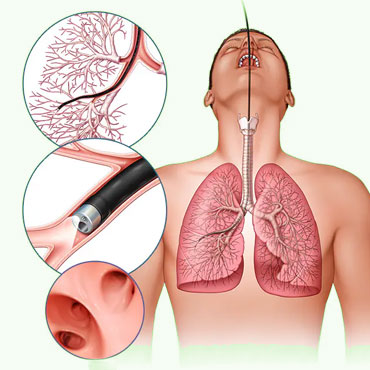
Common Advanced Bronchoscopic Procedures:
- EBUS-TBNA/TBNB (Endobronchial Ultrasound-Guided Needle Aspiration/Biopsy):
This technique uses real-time ultrasound guidance via a bronchoscope to obtain samples from lymph nodes or masses adjacent to the airways. TBNA aspirates cells, while TBNB retrieves small tissue cores for detailed analysis. These are vital for diagnosing and staging lung cancer, lymphoma, tuberculosis, sarcoidosis, and other mediastinal diseases. - Bronchoscopic Lung Biopsy:
Used to collect lung tissue samples for diagnosing infections, cancer, or interstitial lung disease. - Therapeutic Bronchoscopy:
Includes removing mucus plugs, placing stents in narrowed airways, or treating tumors with laser or electrocautery. - Endobronchial Biopsy:
Tissue samples are taken directly from visible lesions within the bronchial tubes during bronchoscopy. This helps diagnose conditions like lung cancer, tuberculosis, sarcoidosis, and airway tumors.
Who Needs These Procedures?
Patients with:
- Unexplained lung nodules or masses
- Persistent cough, wheezing, or breathlessness
- Abnormal chest X-ray or CT scan findings
- Suspected or confirmed lung cancer or TB
- Interstitial or autoimmune lung diseases
- Mediastinal adenopathy
Why They Matter:
These procedures are minimally invasive, offer accurate diagnosis, and often mitigate the need for open surgery and help in precisely managing conditions like lung cancer, TB, sarcoidosis, and chronic infections effectively.